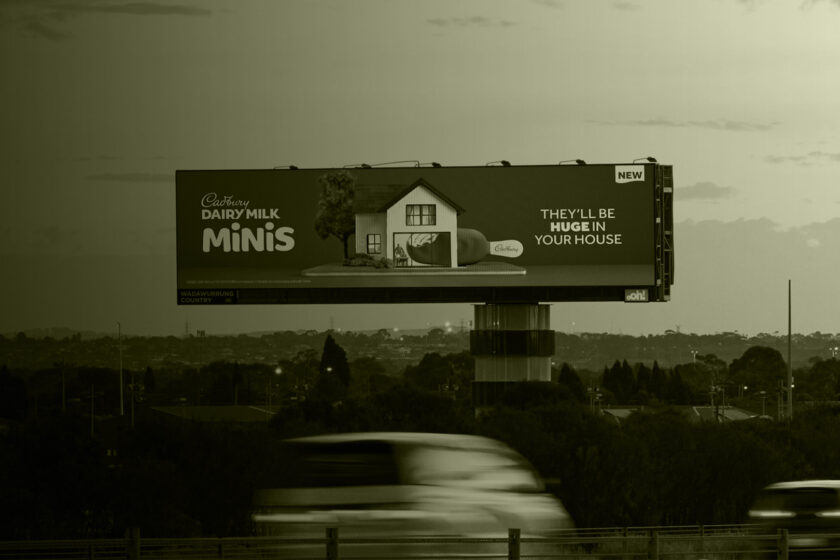
Billboard Advertising
How Location Shapes Brand Recall
Billboard Placement Strategy: The Psychology Behind Where You Show Up
In outdoor advertising, creativity matters.
But placement matters more.
A powerful visual in the wrong location becomes invisible.
A strategic location with the right timing becomes unforgettable.
Billboard placement strategy is not simply about finding an open site. It is about understanding how people move, how they think, and how attention forms in real-world environments.
Because in outdoor media, psychology drives performance.
Placement matters.
Timing matters.
Relevance matters.
Why Location Influences Memory
Human memory is deeply connected to context.
We remember things better when:
They are tied to familiar routes
They appear repeatedly in consistent environments
They are encountered during moments of low distraction
A well-executed billboard placement strategy leverages habitual behaviour. When commuters pass the same premium site daily, the brain forms associative links between the brand and the environment.
This repeated exposure builds:
Brand familiarity
Subconscious trust
Long-term recall
Outdoor advertising does not interrupt behaviour. It integrates into it.
The Power of Vantage Points
Not all visibility is equal.
A strong billboard placement strategy considers:
1. Viewing Angle
Is the billboard directly facing traffic?
Is it positioned at eye level?
Is there visual clutter nearby?
Clean sightlines increase cognitive processing speed. The brain prefers clarity. When a message is easily digestible from the driver’s natural line of sight, recall increases significantly.
2. Approach Distance
A longer approach gives the brain time to register:
Brand name
Key visual
Core message
If the message is only visible for two seconds, recall drops. Premium placements maximise approach time.
3. Background Contrast
Skyline domination versus street-level blending matters. A billboard should command contrast against its surroundings.
Billboard placement strategy is about owning visual space, not just occupying it.
Dwell Time: The Hidden Performance Driver
Dwell time refers to how long a person is exposed to a billboard.
In South Africa’s major metros, dwell time increases due to:
Peak-hour congestion
Urban bottlenecks
Toll gates and intersections
Traffic lights
Road construction slow zones
Longer dwell time creates:
Deeper message processing
Stronger emotional connection
Higher brand retention
A billboard positioned before a traffic light often outperforms one placed on a high-speed stretch of road.
The psychology is simple:
The brain needs time to encode memory.
Strategic site selection increases dwell time intentionally.
Traffic Flow and Cognitive State
Consumer psychology shifts depending on traffic conditions.
Fast-Moving Highways
Shorter attention windows
Simplified message required
Bold, high-contrast creative needed
Congested Urban Roads
Extended viewing duration
Opportunity for layered messaging
Stronger brand storytelling potential
A strong billboard placement strategy adapts creative execution to traffic psychology.
Placement and creative must align.
Frequency Builds Familiarity
Brand recall increases when exposure becomes habitual.
Commuter corridors are powerful because they:
Repeat exposure daily
Anchor brands to routine behaviour
Reinforce mental availability
Mental availability is one of the strongest predictors of brand choice.
If your billboard is seen every weekday at 7:45am on the N1, it becomes part of the commuter’s daily rhythm.
That is not visibility.
That is psychological imprinting.
The Relevance Principle
Relevance strengthens memory.
A billboard placement strategy should consider:
Is the location aligned with the target audience?
Does the surrounding environment support the message?
Is the audience in the right mindset for this brand?
For example:
A financial service brand near business districts
A retail brand near shopping corridors
A tourism brand near airport routes
When location aligns with consumer intent, brand processing becomes more meaningful.
Relevance reduces cognitive friction.
Environmental Priming: The Subconscious Effect
The environment influences interpretation.
This concept is known as environmental priming.
A premium billboard in a high-end commercial area signals:
Quality
Authority
Market leadership
The same creative placed in a low-visibility industrial zone may weaken perception.
Billboard placement strategy affects not just who sees your brand, but how they perceive it.
Location shapes brand stature.
National vs Local Placement Psychology
In South Africa, placement psychology differs by geography.
Metropolitan Corridors
High traffic density
Competitive advertising environment
Strong brand rivalry
High prestige positioning
Regional Routes
Community recognition
Localised brand dominance
Lower clutter
Strong recall through repetition
A smart billboard placement strategy balances:
National reach
Boutique local precision
Strategic footprint expansion
Data-Driven Site Selection
Modern outdoor media planning incorporates:
Real-time traffic counts
Independent auditing
OMC audience data
Demographic overlays
This transforms billboard placement strategy from assumption into precision.
When data supports creative execution, campaigns deliver measurable impact.
Attention becomes engineered.
The Role of Timing
Timing is as critical as location.
Campaign success improves when placements align with:
Seasonal peaks
Traffic surges
Event-based activity
Product launches
Market expansion moments
A billboard placed during peak commuter flow maximises exposure efficiency.
Timing amplifies placement.
Why Strategic Site Selection Wins
There is a major difference between available space and strategic space.
Strategic site selection considers:
Vantage dominance
Traffic flow psychology
Dwell time opportunity
Environmental prestige
Audience relevance
Legal compliance and sustainability
Billboard placement strategy is craftsmanship.
It is not about volume.
It is about precision.
From Visibility to Memory
The ultimate goal of any billboard is not exposure.
It is recall.
When a brand becomes:
Familiar
Recognisable
Mentally accessible
It influences purchasing decisions long after the drive ends.
Placement shapes memory.
Memory shapes choice.
Placement Matters. Timing Matters. Relevance Matters.
Outdoor advertising is not simply about occupying space.
It is about understanding human behaviour.
When billboard placement strategy aligns with:
Movement patterns
Cognitive processing
Environmental context
Audience intent
Brands move beyond visibility.
They become part of daily life.
And when placement is precise, attention does more than land.
It lasts.